| |
Real-Time Technology
Cyclic based Real-Time
Event-Driven Real-Time
Real-Time Software
Development Platforms
Development Tools
Access to Hardware Resources in Real-Time
DMA and Real-Time
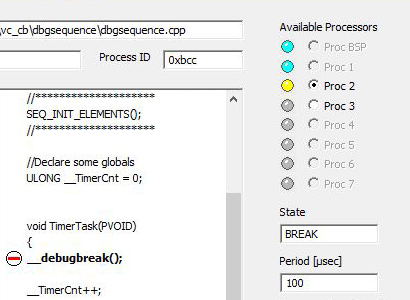
Real-Time Debuggers and Sequencers
Real-Time System Analysis
Emergency Operation
Transport Layers
Protocol Layers
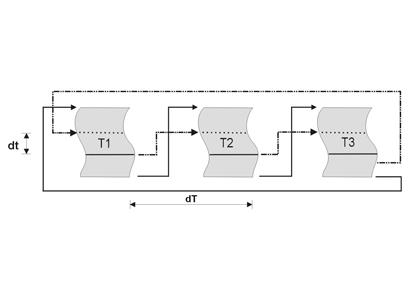
Latency and Jitter
Platform Influence
|
|
|
|
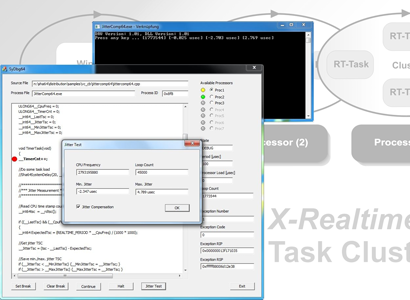
Real-Time Development Environment
|
| |
Training Tools
|
|

|
|
Knowledge of C/C++ programming is required for the real-time course
|
| |
The course takes place as "Hybrid Training" (remote or classic in-person). Sybera also offers this training as an in-house seminar on-site at the customer's location
|
|
Real-Time Programming Course for RTOS Systems
|
|
In modern industry, real-time systems are the core of critical applications, from industrial automation to medical technology. Mastering deterministic real-time programming is therefore a key qualification for any ambitious developer. Only those who understand the mechanisms and challenges of time-critical system development can create programs with high performance and minimal jitter.
|
Goal of the Training
|
|
This training provides the solid fundamentals of real-time technology, internal processes, and real-time programming. The main goal of the one-day course is to qualify participants to correctly implement time-critical processes programmatically using an appropriate development environment, and to analyze and optimize the performance of their real-time programs regarding critical factors such as latency and jitter.
|
Training Content
|
|
The course comprehensively covers the fundamentals of real-time software development. Participants learn the distinction and functionality of Cyclic based and Event-Driven Real-Time. The focus is on real-time system programming, including correct access to hardware resources—a critical point that also includes the use of DMA (Direct Memory Access). Furthermore, handling specialized real-time debuggers and real-time sequencers is taught to master real-time system analysis. Additionally, the concepts behind development platforms and tools, as well as the significance of transport layers, protocol layers, and strategies for emergency operation, are explained in detail.
|
Who is this Real-Time Training suitable for?
|
|
The real-time programming course is primarily aimed at system programmers and software developers who are either new to the field of deterministic real-time systems or wish to deepen their existing expertise. A prerequisite for successful participation in the training is knowledge of C/C++ programming.
|
Course Formats
|
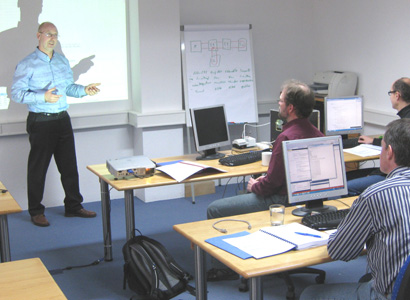
The training is offered in a Hybrid Format: Remote, In-Person, or In-House at the customer's location, allowing for flexible learning regardless of location. In-person courses at Sybera offer an interactive environment and exchange with other participants. In-house training can also be individually tailored to company projects and specific requirements.
This EtherCAT training is vendor-independent and provides fundamental expertise that contributes to the stable, efficient, and powerful use of EtherCAT networks in automation projects.
|