The creation of a process triggers a series of system management operations. Both
priority-controlled multitasking and virtual memory management must manage the new process
using structural elements (objects). The programs TASKMGR and PVIEW are available
to monitor active processes. PVIEW provides detailed information about the
current utilization of system resources and the active threads, depending on their priority.
The virtual address space abstracts the physical memory. Both the user and system address spaces are
fragmented, meaning the memory is divided into individual, non-contiguous segments (PAGEs).
Due to this fragmentation and the shifts (relocations), data at the same address offset is usually
located at different positions in the physical memory.
The SOCKET interface serves as a link between the application layer and the system network stack
and enables simple IP communication. Access to RAW Ethernet data is not possible here. The
COMM interface establishes the connection between the application layer and the serial system stack
and allows for standardized communication with the UART chip, including the standardized setting of
UART parameters.
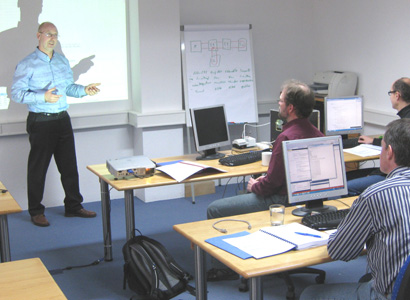
In addition to a solid foundation in the basics, the training also covers practical topics such as Structure and Introduction to Windows System Architecture, System Services and NativeAPI, System Files, Process Management, Sockets, Multitasking and Thread Management, Windows Registry, SetupAPI, Event Handling, and the use of relevant tools using practical examples.